Water Heaters· 7 min read
Tank vs. Tankless Water Heaters: Which Is Right for Your Home?
Upfront cost, hot water demand and our hard water all play a part. We break down the real trade-offs for Central Alberta homes.
By the Clearkwick Plumbing team
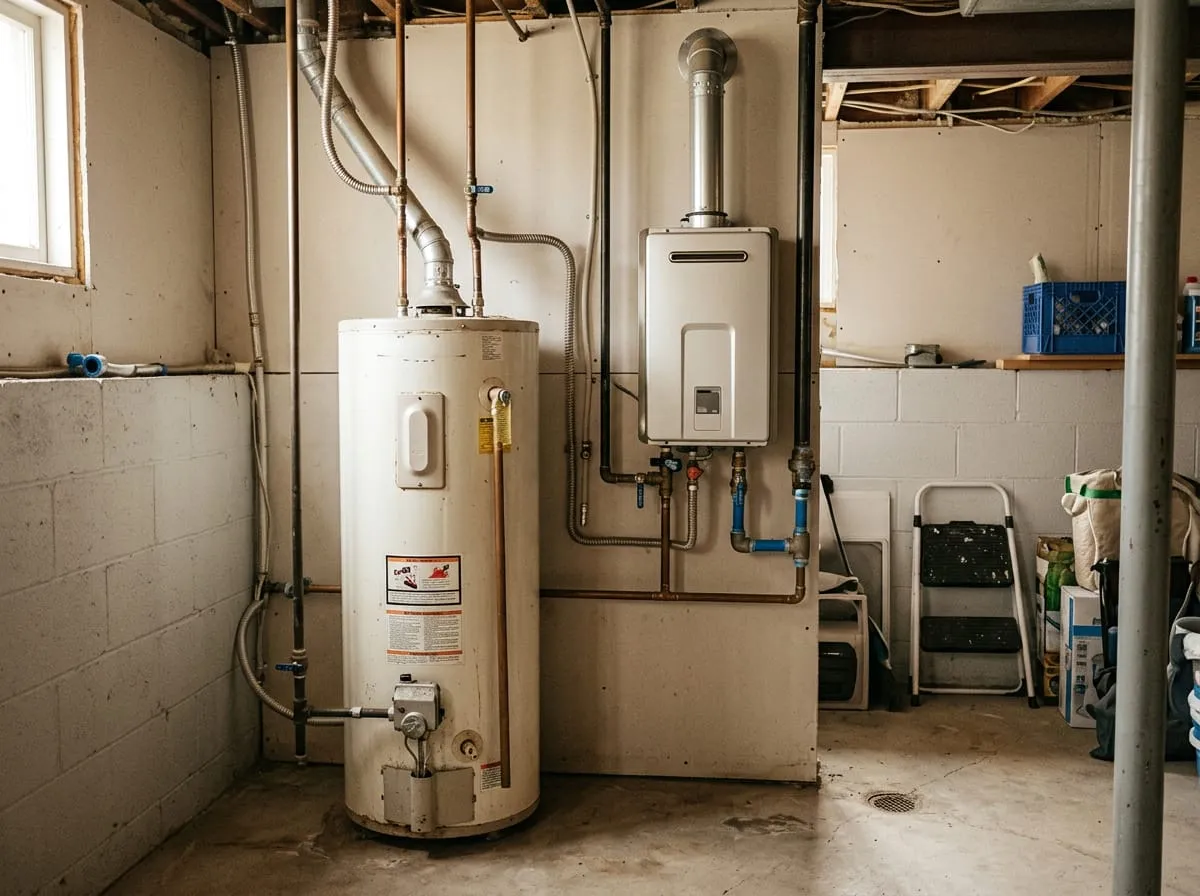
When a water heater fails, or you’re planning ahead before it does, the first question is usually whether to replace it with another tank or switch to tankless. Both are good technology. The right choice depends on how your household uses hot water, what your home can accommodate and your budget.
Here’s a straightforward comparison.
How each one works
A storage-tank water heater keeps a set volume of water, commonly 40 to 60 gallons for a house, heated and ready. When you use hot water, cold water refills the tank and is heated again. Most homes in Central Alberta have a natural gas tank.
A tankless (on-demand) water heater heats water only as it flows through the unit. There’s no stored hot water, so the unit fires up when you open a hot tap and shuts off when you close it.
The comparison at a glance
| Feature | Storage tank | Tankless |
|---|---|---|
| Upfront cost | Lower | Higher (unit and installation) |
| Hot water supply | Limited by tank size | Continuous, limited by flow rate |
| Energy use | Some standby heat loss | No standby loss |
| Typical lifespan | ~8–12 years | Often longer with maintenance |
| Space | Floor space required | Wall-mounted, compact |
| Maintenance | Annual flush, anode checks | Regular descaling, filter cleaning |
Hot water demand: tank size vs. flow rate
With a tank, the question is volume: will 50 gallons cover back-to-back showers? With tankless, the question is flow: how many fixtures can run at once? In winter that question matters more, because incoming water is much colder and the unit has to work harder to raise its temperature.
A tankless unit that’s undersized for a Central Alberta January may deliver lukewarm water when two showers and the dishwasher run together. Proper sizing, based on your fixtures and the winter inlet temperature, is essential.
Hard water matters
Much of Central Alberta has moderately hard to hard water. Minerals form scale inside both types of heater, but tankless heat exchangers are particularly sensitive to it. Expect to descale a tankless unit regularly, often annually, or consider a water softener. Skipping this maintenance is the most common reason tankless units underperform.
Tanks aren’t immune: sediment settles at the bottom, causing rumbling noises and reduced efficiency. An annual flush helps.
Installation considerations
Switching from a tank to tankless isn’t always a simple swap:
- Gas supply: tankless units need a lot of gas at peak demand, and some homes need a larger gas line.
- Venting: high-efficiency units usually vent through the wall with PVC, which requires a suitable exterior location.
- Electrical: most gas tankless units need a power outlet nearby.
- Permits: water heater installations in Alberta generally require plumbing and gas permits.
These factors can add meaningfully to the installed cost, which is why an on-site assessment matters before you decide.
So which is right for you?
A tank is often the better fit if:
- You want the lowest upfront cost
- Your household’s hot water use is moderate and predictable
- Your existing venting and gas line suit a like-for-like replacement
- You need a same-day replacement after a failure
Tankless is often the better fit if:
- You regularly run out of hot water with your current tank
- You want to free up floor space in a finished basement
- You plan to stay in the home long enough to benefit from the longer lifespan
- You’re willing to keep up with descaling
Our honest take
Neither option is universally better. We regularly talk people out of tankless when their usage or home set-up doesn’t suit it, and we install high-efficiency tanks that will serve a family well for the next decade.
If you’re weighing the options, our water heater team can assess your home, explain the full installed cost of each choice and let you decide. If your current tank is leaking right now, call our emergency line.